
OVHcloud · France
Hosted in France
With OVHcloud, on dedicated, encrypted infrastructure.
Breakfast on November 27 in Paris: is your value chain ready for the next crises? Learn more

CSR and QHSE
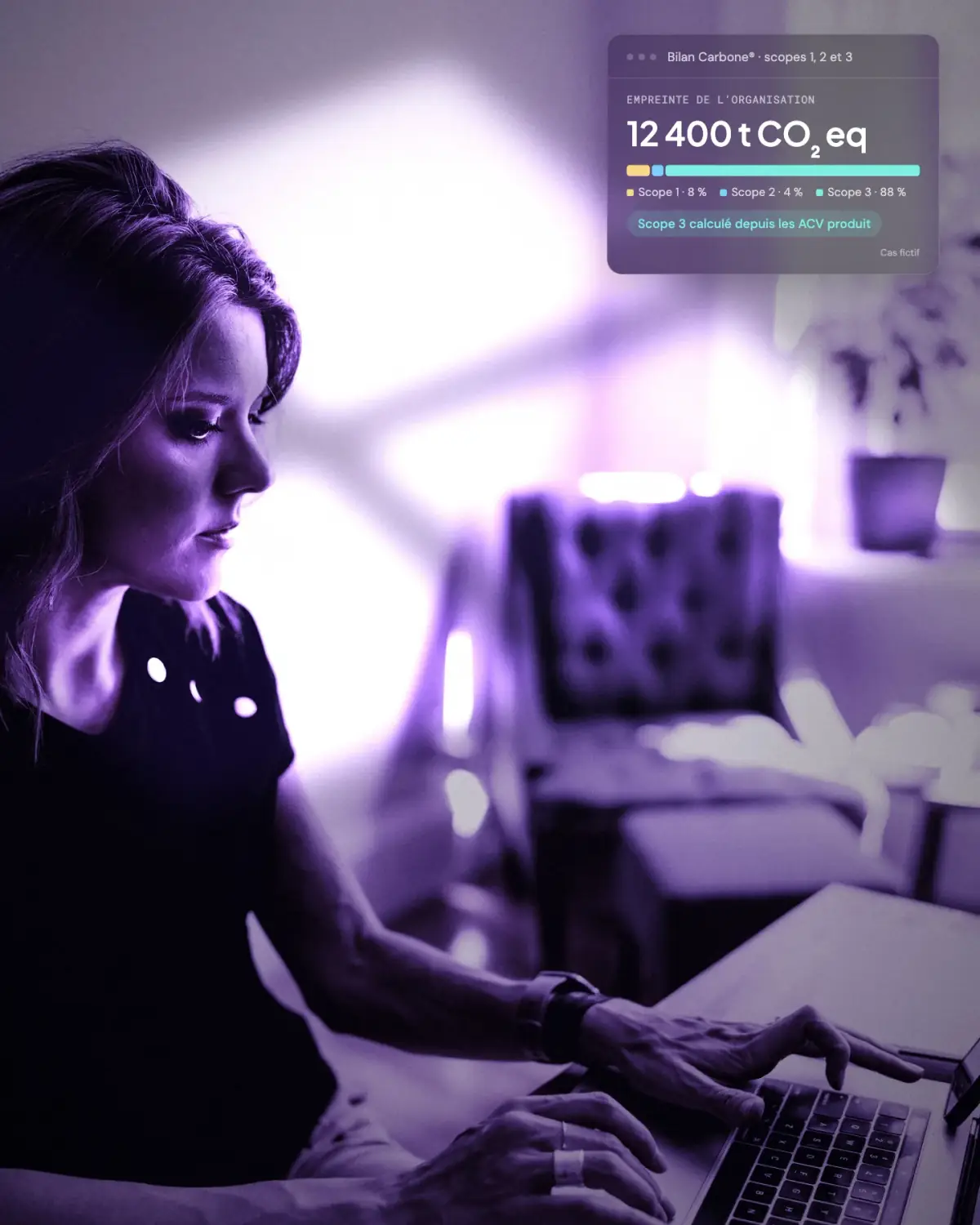
The footprint of each reference and the company's carbon footprint, on the same base. Every number traces back to its source, in front of a customer as in front of an auditor.
Their CSR and environment teams work in Sapiologie




The challenge
Customers pass their requirements down their entire supply chain: they want the footprint of the product purchased, reference by reference.
Without Sapiologie
With
Drag to compare
Your questions
What CSR is asked today. For each question, what Sapiologie does, and the page that details it.
The footprint of each reference, across all indicators
The product is described once; its footprint is calculated across the 16 EF 3.1 indicators, climate included.
The company's carbon footprint, from your products
Your LCAs multiplied by your volumes sold give the company's footprint, alongside your existing carbon footprint.
Every value traces back to its source and its assumption
Method, scope, database and version: a customer or an auditor finds everything in the same tool.
Ask the suppliers that matter first
Your LCAs already show each supplier's contribution to your scope 3: data collection starts with them.
From request to response
The tender's references are quantified in one batch, on your LCA expert's building blocks. Each value keeps its source until the response.
LUM-0600-3000-ON108kg CO2 eqLUM-1200-5000-ON179kg CO2 eqLUM-1200-5000-DALI183kg CO2 eqLUM-1500-7000-DALI217kg CO2 eqWho it’s for
They receive the questionnaires, prepare the audits and reach out to suppliers. R&D and your LCA expert build the model with them.
With R&D and your LCA expertR&D describes the product, the LCA expert sets the methods: nothing enters a calculation without their approval.
They use it
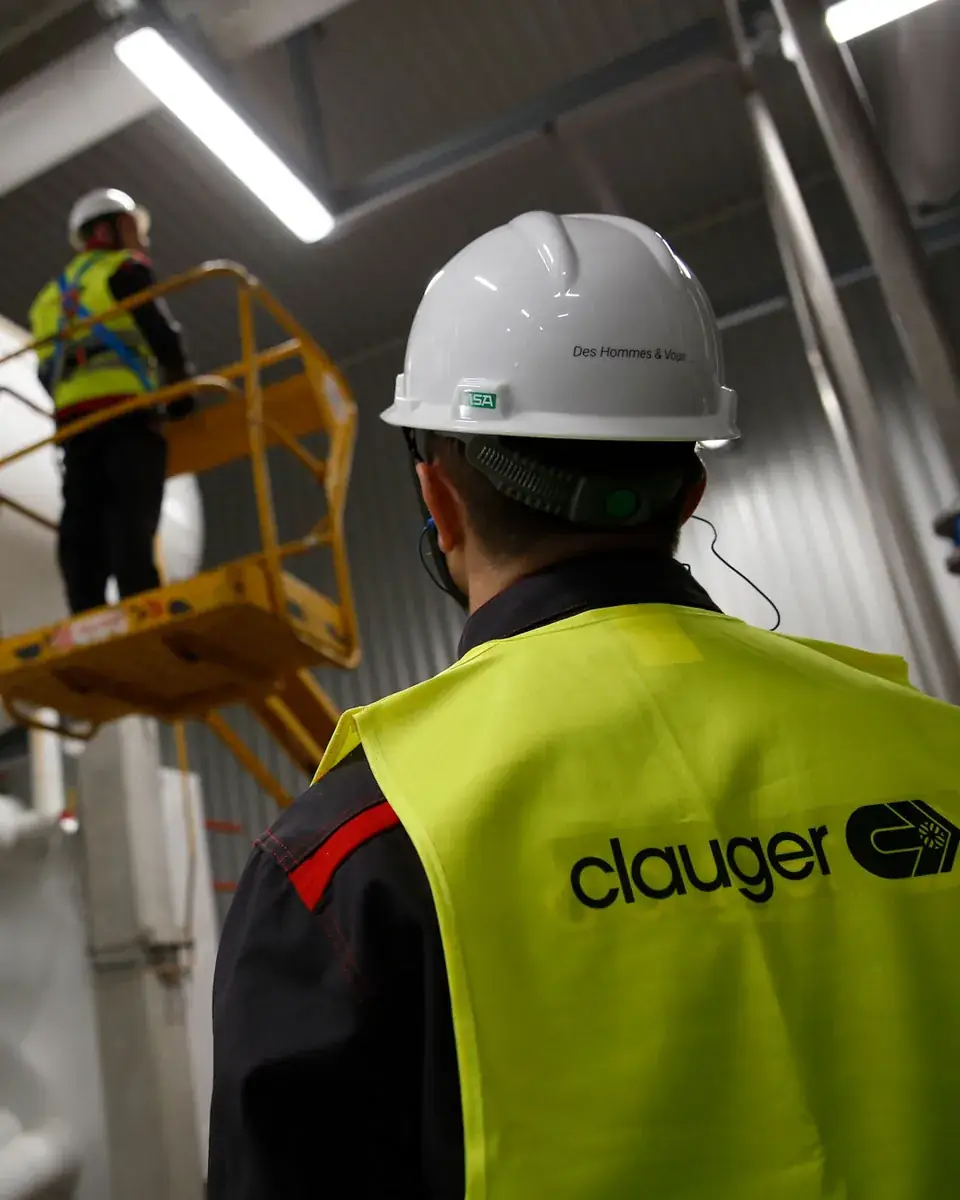
Clauger
“The carbon footprint application is included in Sapiologie. It's an advantage for my dual role, it has value, because everything feeds into everything else.”
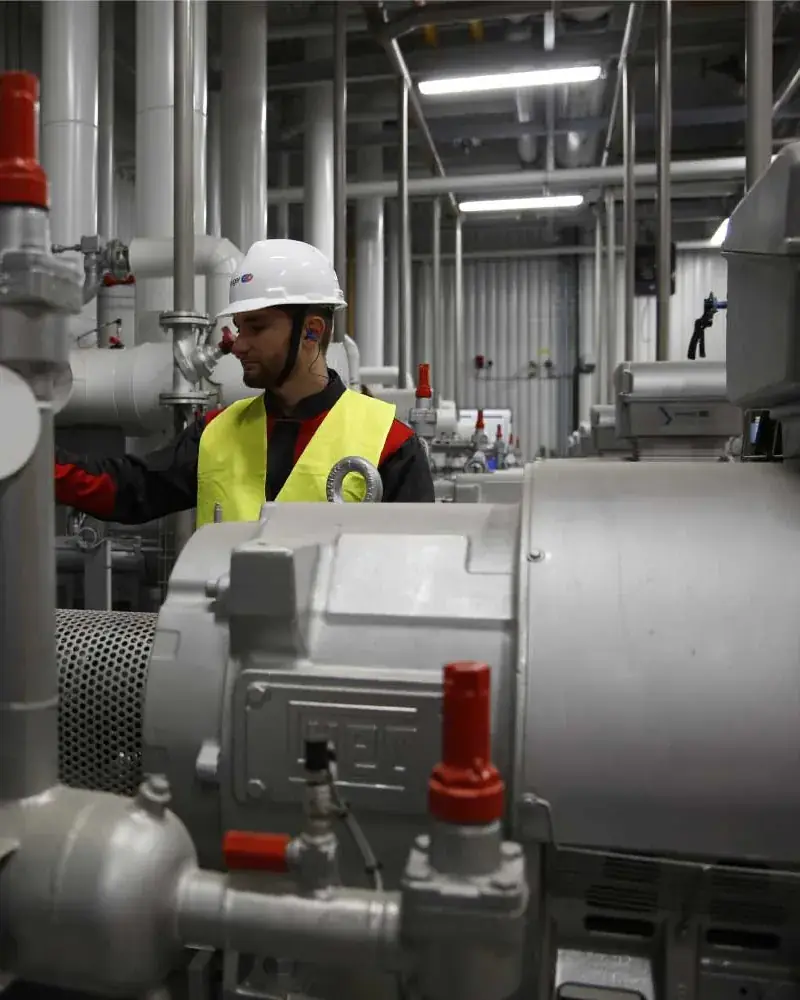 Industrial refrigeration and air treatment
Security and sovereignty
A product inventory is an industrial secret. Every access, every role and every action is controlled in a single workspace.
With OVHcloud, on dedicated, encrypted infrastructure.
The AI provided by Sapiologie runs on Mistral AI, a French company, with zero retention: your data is never used to train a model.
The infrastructure that hosts your data is ISO/IEC 27001:2022 certified.
Every action is logged and can be consulted, including by an auditor invited into the tool.
Lead expert, engineer, auditor: each sees and edits what their role allows.
Sign in with your company account (SSO) and two-factor authentication (2FA).
FAQ
The questions CSR and QHSE managers ask before choosing Sapiologie.
See the release notesYes. The carbon footprint is included with the LCA application, following the Bilan Carbone® method; its value is the link to your products.
Often yes for LCA, because the scope and the data collection differ from those of the carbon footprint. Your existing footprint loads and can be compared with the one calculated from your products, with no double accounting.
No. Your products' LCAs feed sustainability reporting, notably scope 3, but Sapiologie does not automate CSRD or VSME, the framework for small companies.
Each flow is tied to a site and labeled scope 1, 2 or 3. Sapiologie starts from the Bilan Carbone® method, which is more exhaustive and encompasses the GHG Protocol. A footprint under the GHG Protocol is not a carbon footprint in the sense of this method.
ISO 14001 is a management standard; LCA falls under ISO 14040 and 14044. The two meet when an LCA objective becomes part of a site's ISO 14001 objectives: organizational LCA can help meet the standard's analysis requirements at site level.
Yes. Every value traces back to its source and its assumption, a published result never changes without your action, and every version is kept. The calculation is deterministic: no language model is involved in the impact calculation. The auditor approves the modeling and its parameters, not each footprint one by one: it is a proof approach, not a certification.
Yes, for the method: your expert, in-house or from a partner firm, chooses the modeling and stands behind it. Sapiologie publishes the software; partner firms carry out the LCAs and critical reviews.
The Risk analysis extension reuses the inventory already entered, with no new data collection: social risks, geopolitical risks, critical raw materials of the European Union. It is a hotspot method: it tells you where to look, it proves nothing about a specific supplier.