May 22, 2024
Introduction
In 2025, the costs of climate change for industrial companies are a measurable reality:
1 trillion dollars of risks by 2030 (CDP).
44.5 billion euros/year of losses in Europe (European Environment Agency).
Yet, only 24% of industrialists measure their Scope 3 emissions (EcoVadis/BCG, 2025), and even fewer assess the social, geopolitical, or climate risks on their value chain.
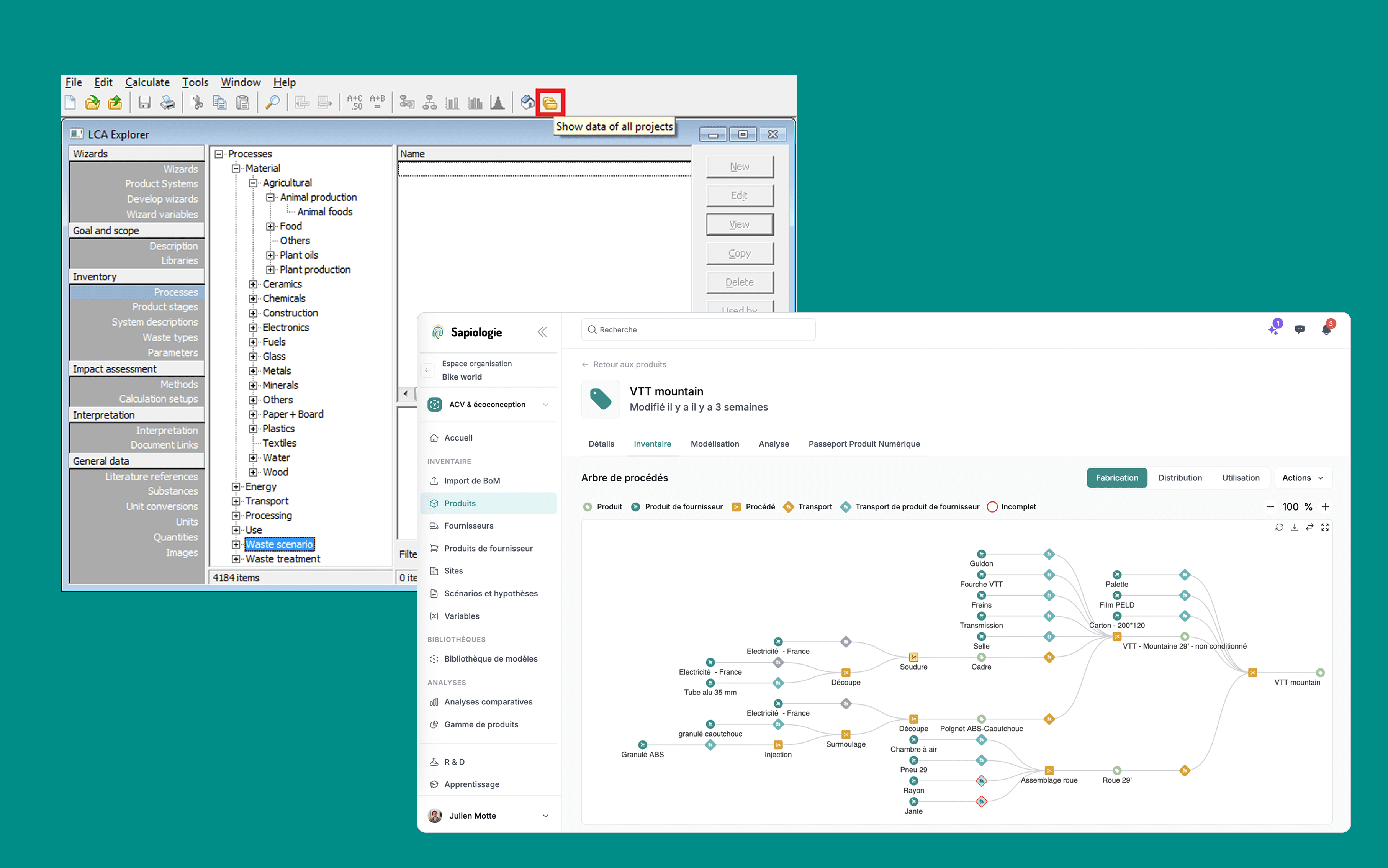
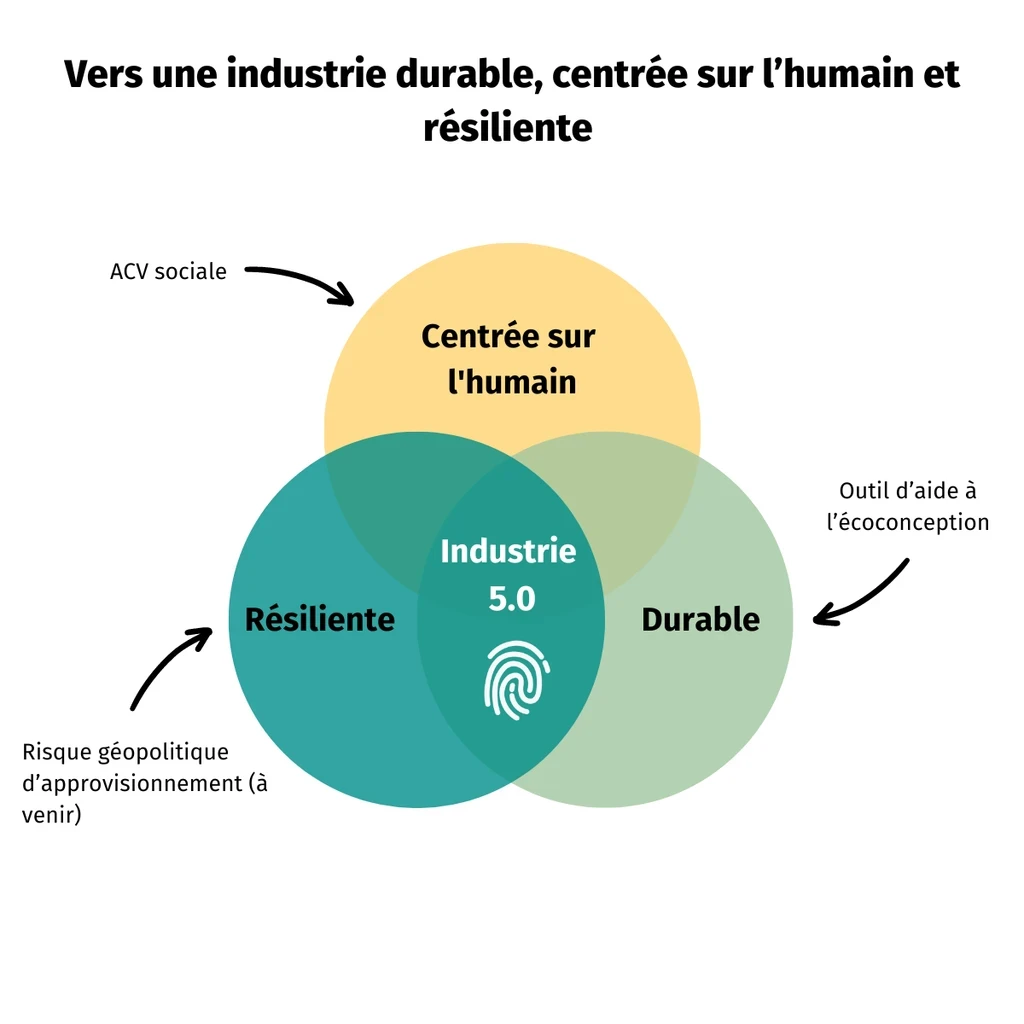
The solution? A holistic approach combining Life Cycle Assessment (LCA) and multi-dimensional risk analysis (social, geopolitical, climate, etc.). This is precisely what Sapiologie proposes.
We are experiencing a period of great changes
The world is in constant change. These changes are multiple and tend to accelerate.
The climate is changing faster and faster
Social inequalities are exacerbating, and social scandals are becoming more frequent
Resources are dwindling
The global geopolitical situation is tense
Moreover, there are numerous negative feedback loops in these world developments. The most vulnerable populations are the most exposed to climate change, which contributes to accelerating their precarity. The reduction in resource availability affects these vulnerable populations more severely, as they are not equipped to play the market game.
Furthermore, they generally benefit the least financially from resource exploitation.
All these injustices create the breeding ground for political and geopolitical instability.
The more linear and globalized the value chain, the greater the risk
Globalized value chains are generally:
opaque, thus with a high social risk and a strong reputational risk
transport-intensive
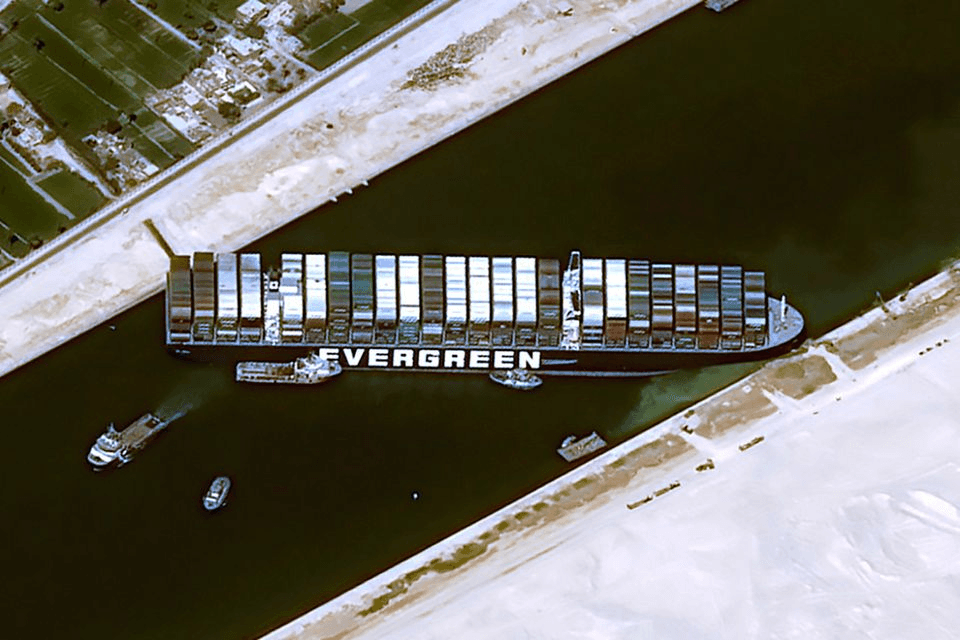
sensitive to geopolitical changes
sensitive to climate change
And this is regularly observed in the news:
3. The supply chain: the blind spot of companies
Supplies (scope 3) represent 80 to 90% of a company's total carbon footprint.
On a product scale, they account for an average of 85% of the environmental impacts of the product over its entire life cycle
Only 24% of companies measure their scope 3 emissions, and even fewer assess the social, geopolitical, or climate risks on their value chain. (EcoVadis/BCG, 2025)
Companies have a very poor understanding of their value chain, which is partly why they struggle to measure and thus reduce their scope 3 emissions, as well as their exposure to the various risks mentioned above.
The cost of inaction is substantial
More than 200 of the world's largest listed companies anticipate that climate change could cost them almost 1 trillion dollars (888 billion euros) in total, largely in the next five years, according to a report from the CDP organization.
This represents 15 to 20% of the EBIT of companies in the S&P 500
Anticipation as a lever for competitiveness
Potential opportunities worth 2.1 trillion dollars (CDP)
Up to $19 of losses avoided for every $1 invested in adaptation or decarbonization. (WEF and BCG)
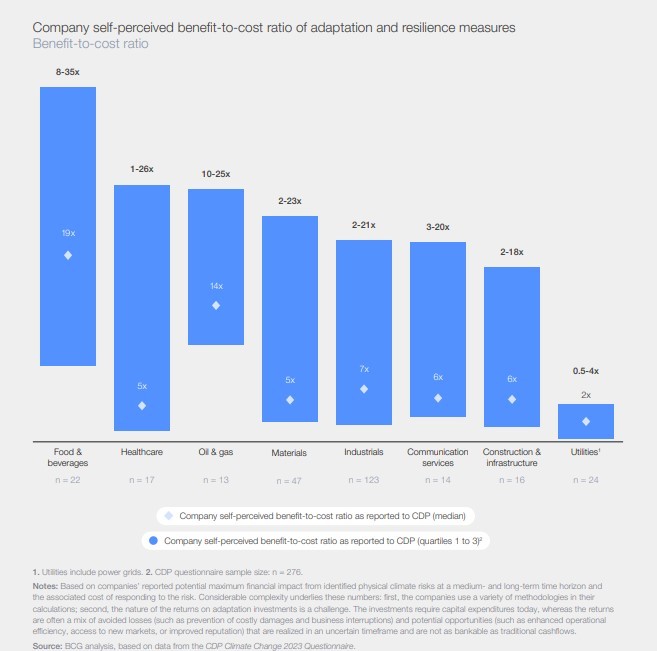
Cost-benefit report of adaptation and resilience measures perceived by the companies themselves (The Cost of Inaction: A CEO Guide to Navigating Climate Risk, WEF and BCG, December 2024)
Get moving now with Sapiologie:
Create a comprehensive mapping of the impacts and risks of your offering
Identify the portion of your revenue at risk
Identify the most critical products and suppliers in terms of environmental impacts and exposure to risks
Simulate the impacts of your decisions
Design a sustainable and resilient company and value chain
Request a demo